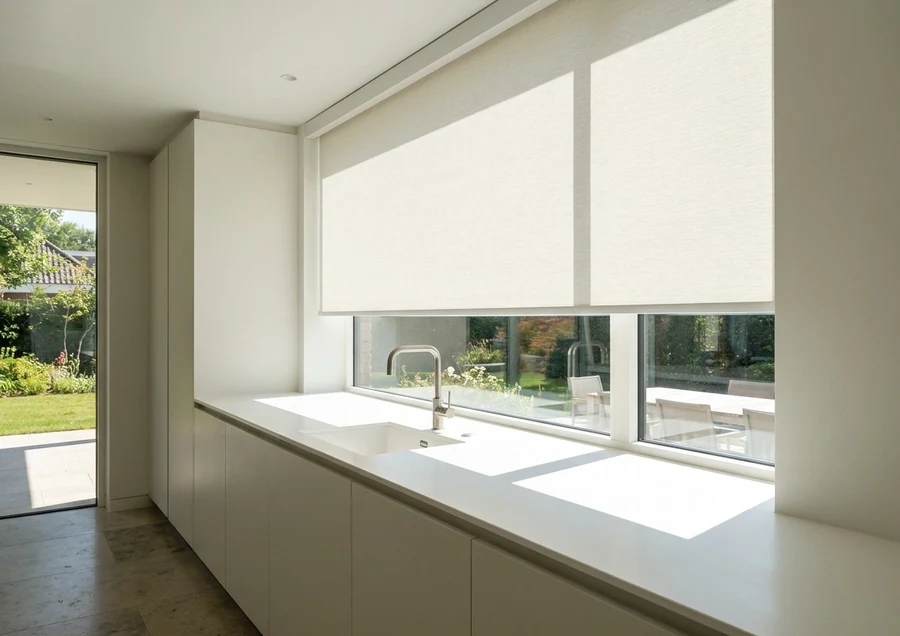
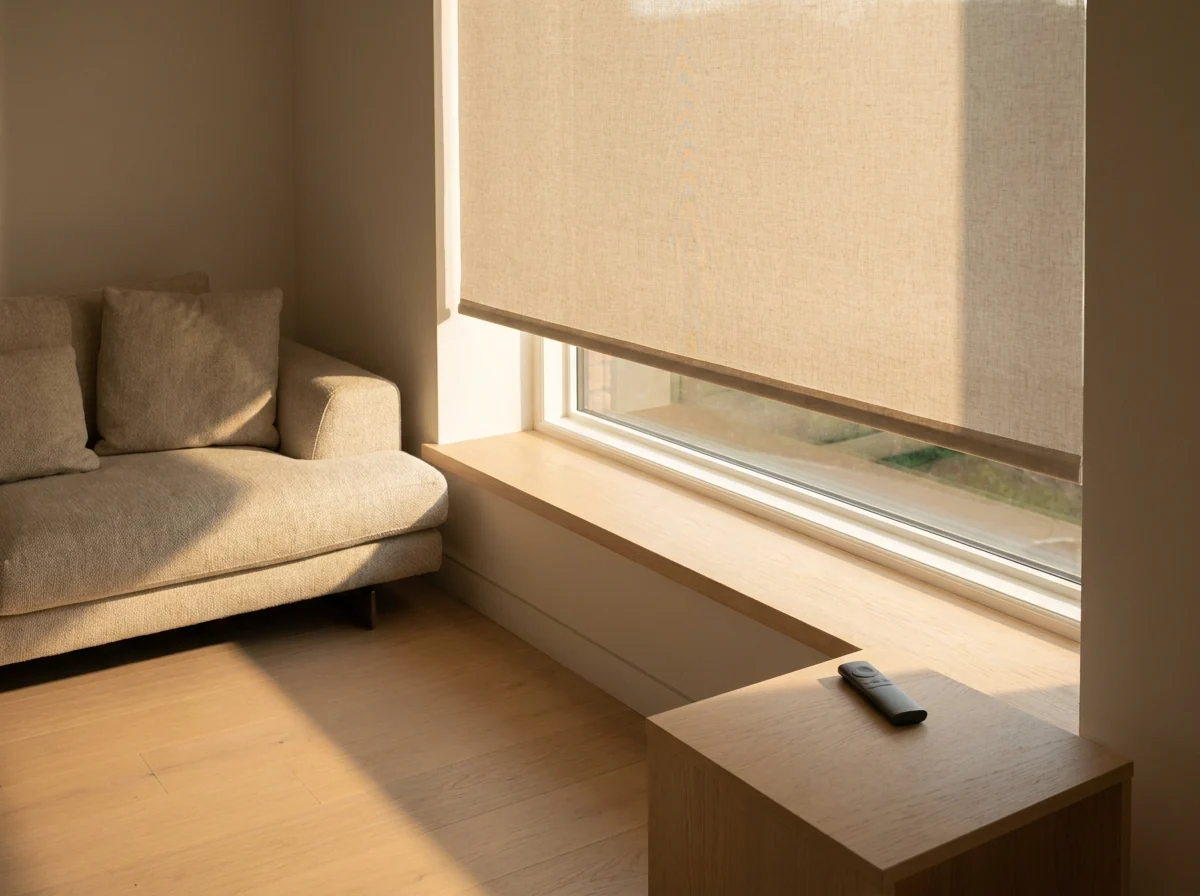
One remote. Every blind. No cords at all.
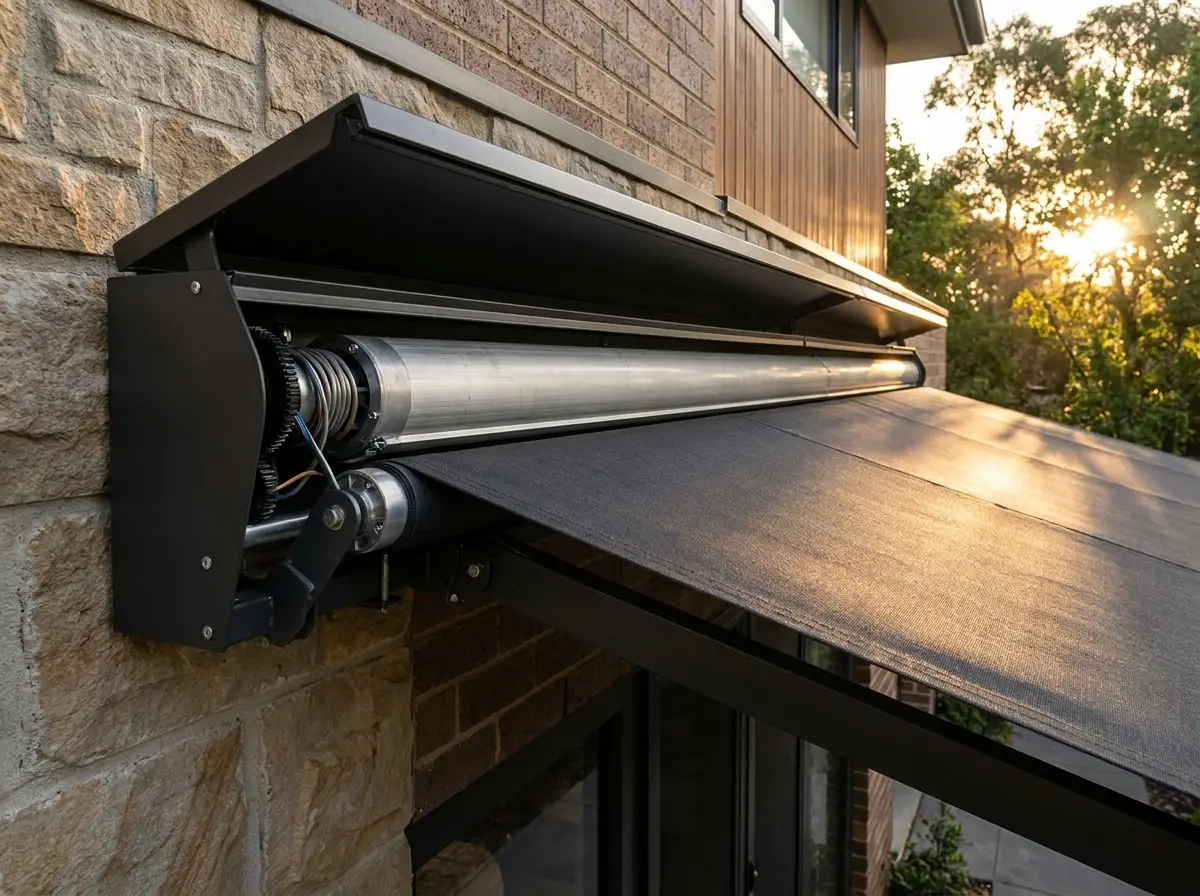
A tubular motor inside the blind roll, controlled by remote, wall switch, phone app, voice assistant, timer or sensor. On the wide and high glazing typical of Broadacres and Cedar Lakes new builds, it's often the only practical way to run a blind at all.
Power options
- Rechargeable battery motors — no wiring, retrofit-friendly, charged every few months. The default for existing homes and apartments where running new cable isn't practical.
- Wired 220V motors — for new builds and renovations, permanent and never need charging, and the right choice for big or heavy systems and any exterior product. Needs an electrician and a bit of planning, ideally before the ceiling closes up.
- Solar trickle-charge options for awkward positions with no easy power run.
Control that matches how you actually live
- A single handset or a multi-channel remote — one remote, every blind in the room.
- App control from the couch, or from the office when you're wondering if you left the west blinds up.
- Schedules — bedroom blinds open with sunrise, west-facing blinds drop automatically at 3pm in summer.
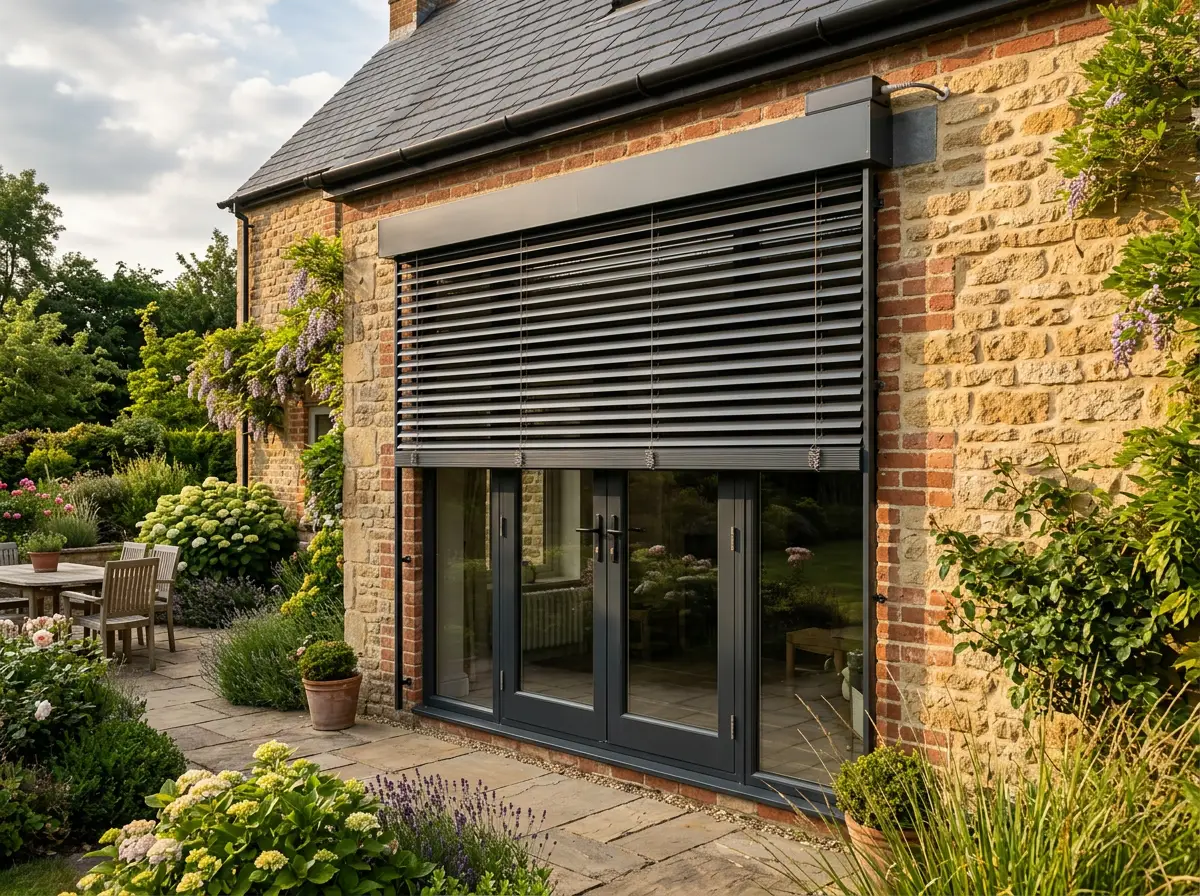
- Sun and wind sensors — sun sensors drop shading on hot elevations automatically; wind sensors retract awnings and exterior screens before a highveld storm can damage them. This is the safety-critical layer on any exterior product.
- Voice and smart-home integration, for the household that's already down that road.
Where motorisation stops being an upsell and starts being the only option
Spans too wide or heavy for a chain, blinds above stair voids or double-volume glass, concealed ceiling-recess systems, and anything exterior — venetians, awnings, zip screens — are effectively motorised systems by design. On a wall of glass with six blinds, "one button, all six" isn't a luxury, it's the difference between the blinds getting used and them staying open forever.
Safety and honesty
No dangling chains is the most child-safe operation there is, full stop. Motors are quiet, not silent, and a decent motor carries a multi-year guarantee. Battery motors do need that periodic charge — we'll set that expectation clearly at the quote stage, not after installation.
What it costs
Motorisation is priced by what it is driving, so the honest answer is a range: roughly R2,500 to R7,500 per square metre installed across the products on this site. A motorised blockout or sunscreen roller lands at R2,500 to R3,800 per square metre; motorised external venetians at R4,500 to R6,500; a motorised folding-arm awning with a wind sensor at R5,500 to R7,500 per square metre of projection.
Those are guide bands per square metre installed rather than quotes, and small windows still carry a minimum charge. What actually decides the figure is the room: how many blinds share one control, whether a battery tube or a wired motor suits the wall, and where the power is. All of which the free measure settles, with the written per-window price coming afterwards.
Where the power runs, and what your estate’s rules say about cable routing and trunking, is covered in the Shading Casebook — free, sourced, and worth reading before anyone drills. Its window schedule gives you a budget range without a visit.
Wondering what a whole-house system costs?
We'll walk your home at the free measure and give you a written quote broken down blind by blind — chain, battery or wired.
Book a Free Measure